
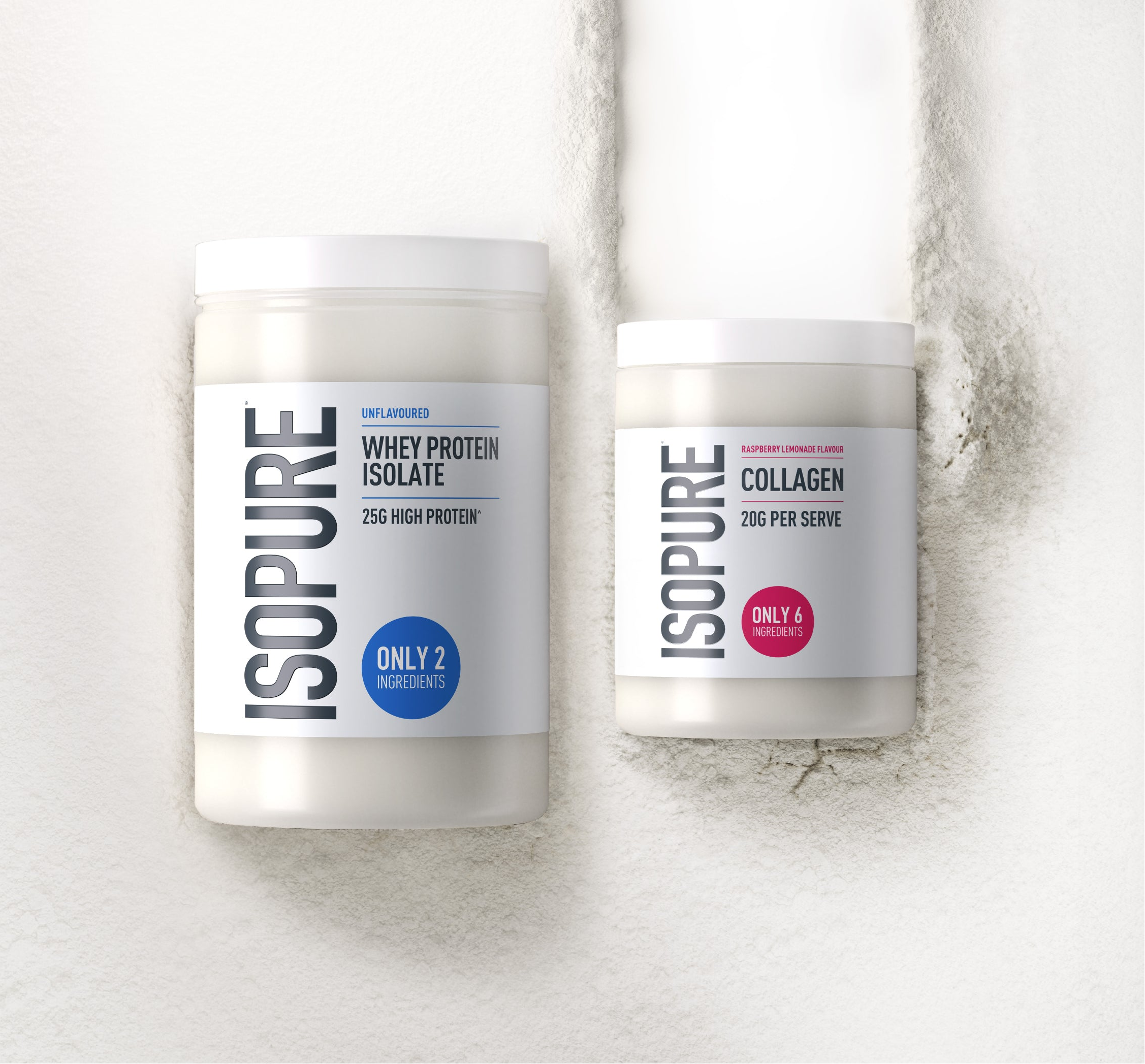

Collagen has quickly become one of the most talked-about ingredients in health and wellness, and it’s easy to see why. It supports the skin, joints and connective tissues that help us look and feel our best. With so many products available, it can be difficult to know how best to take it. Should you rely on food sources? Which nutrients help the body make collagen naturally? And how do supplements fit into your daily routine? Here’s what you need to know.
Where Collagen Comes From
Collagen is naturally found in animal-based sources. Supplements are usually made from bovine or porcine hides, skin and connective tissues, poultry cartilage and knuckles, or marine sources such as fish skin and scales. Each source provides slightly different collagen profiles, often linked to specific types.
Collagen in Food
It’s possible to get collagen through food, although levels vary depending on preparation. Bone broth, made by simmering animal bones for many hours, releases collagen along with other nutrients. Gelatin is another source, as is fish eaten with the skin.
Plant foods do not contain collagen, but some support the body’s natural production by providing the vitamins and minerals needed for collagen synthesis.
Nutrients that Support Collagen Production
To make collagen, the body relies on several key nutrients.
Vitamin C is essential for collagen synthesis and contributes to normal collagen formation for the normal function of cartilage and skin. It’s found in citrus fruits, berries, kiwi, peppers and broccoli.
Sulphur, found in eggs, poultry, beans, nuts and quinoa, supports the linking of collagen fibres. Copper, found in shellfish, sunflower seeds and mushrooms, is also involved in collagen formation. Zinc, found in chicken, red meat, nuts, lentils and spinach, helps activate proteins that build collagen.
A diet low in these nutrients can reduce the body’s ability to produce collagen effectively, which is why supplementation often goes hand in hand with a balanced diet.
Supplementing with Collagen
Hydrolyzed collagen, also known as collagen peptides, is broken down into smaller molecules for easier digestion and absorption. Powders are the most versatile form and can be added to water, coffee, smoothies or recipes. Capsules and ready-to-drink options are also available.
The most important factor is consistency. Collagen needs time to integrate into tissues, and most people start to notice benefits after around eight to twelve weeks of daily use. There isn’t a single best time of day to take collagen – the key is finding a moment that fits naturally into your routine.
Be Patient with Results
Collagen works gradually, so patience is important. Just as building muscle takes time, strengthening connective tissues, skin, hair and nails also requires consistency. Visible results usually appear after a couple of months, although some people may notice changes sooner. The timeframe depends on individual factors such as age, lifestyle, diet and activity levels.
Collagen vs Other Proteins
Although collagen is a protein, it isn’t a complete one, as it lacks certain essential amino acids. This means it shouldn’t replace complete proteins such as whey, casein or soy, which are better suited to muscle building and recovery. Instead, collagen complements these proteins by supporting connective tissues, joints and skin.
Key Takeaway
Collagen can come from both food and supplements, but to achieve consistent and effective levels, supplementation is often the simplest approach. When paired with key nutrients such as vitamin C, zinc and copper, collagen can provide ongoing support for skin, joints and connective tissues over time.


